
Proxy Knowledge
Guide to Configuring Rotating Proxies with Scrapy Framework to Monitor Competitor Prices on E-Commerce Platforms

Table of contents
Problem Statement: Why Monitoring Competitor Prices Determines Survival on E-Commerce Platforms
In the context of an exploding e-commerce market, pricing has become one of the vital competitive factors. Major e-commerce platforms like Shopee, Lazada, Tiki, or Amazon are constantly locked in hourly, or even minute-by-minute, price wars. Any business that catches competitor price fluctuations the fastest will gain a maximum advantage in dynamic pricing, optimizing advertising campaigns, and protecting profit margins.
However, collecting price data on a large scale faces significant technical hurdles from anti-bot defense systems. E-commerce platforms apply many complex mechanisms such as rate limiting, IP blocking, CAPTCHA requirements, or browser fingerprint checks. If you rely on a single IP address to access thousands of product pages in a short time, your IP will be blocked immediately. This is precisely why combining proxy scrapy python and the rotating proxy scrapy technique has become the professional standard solution for e-commerce price crawling.
The Role of Rotating Proxies in Crawling E-Commerce Data
A proxy acts as an intermediary server standing between the data collection application (Scrapy Spider) and the target website. When using a proxy, the real IP address of the crawling server is hidden, and the target website only records the IP of the proxy server.
However, if you only use a static proxy (Static Proxy), the risk of detection and access restriction remains very high when sending bulk requests. The rotating proxy scrapy (IP rotation) technique automatically changes the outbound IP address for each HTTP request or after a certain interval. This brings several outstanding benefits:
- Bypass Rate Limits: Distribute thousands of requests coming from hundreds of different IP addresses, making the website's monitoring system perceive it as natural traffic from multiple independent users.
- Avoid Widespread IP Bans: If an IP is detected and temporarily blocked (returning HTTP 403 Forbidden or 429 Too Many Requests errors), the system will immediately discard that IP and switch to a clean one to continue working without interrupting the entire process.
- Geo-targeted Data Collection: Many e-commerce platforms display different prices and shipping costs depending on the buyer's geographical location. Rotating proxies allow you to select IPs in specific provinces, cities, or countries to gather the most accurate prices.
Overview of Scrapy Proxy Middleware Architecture
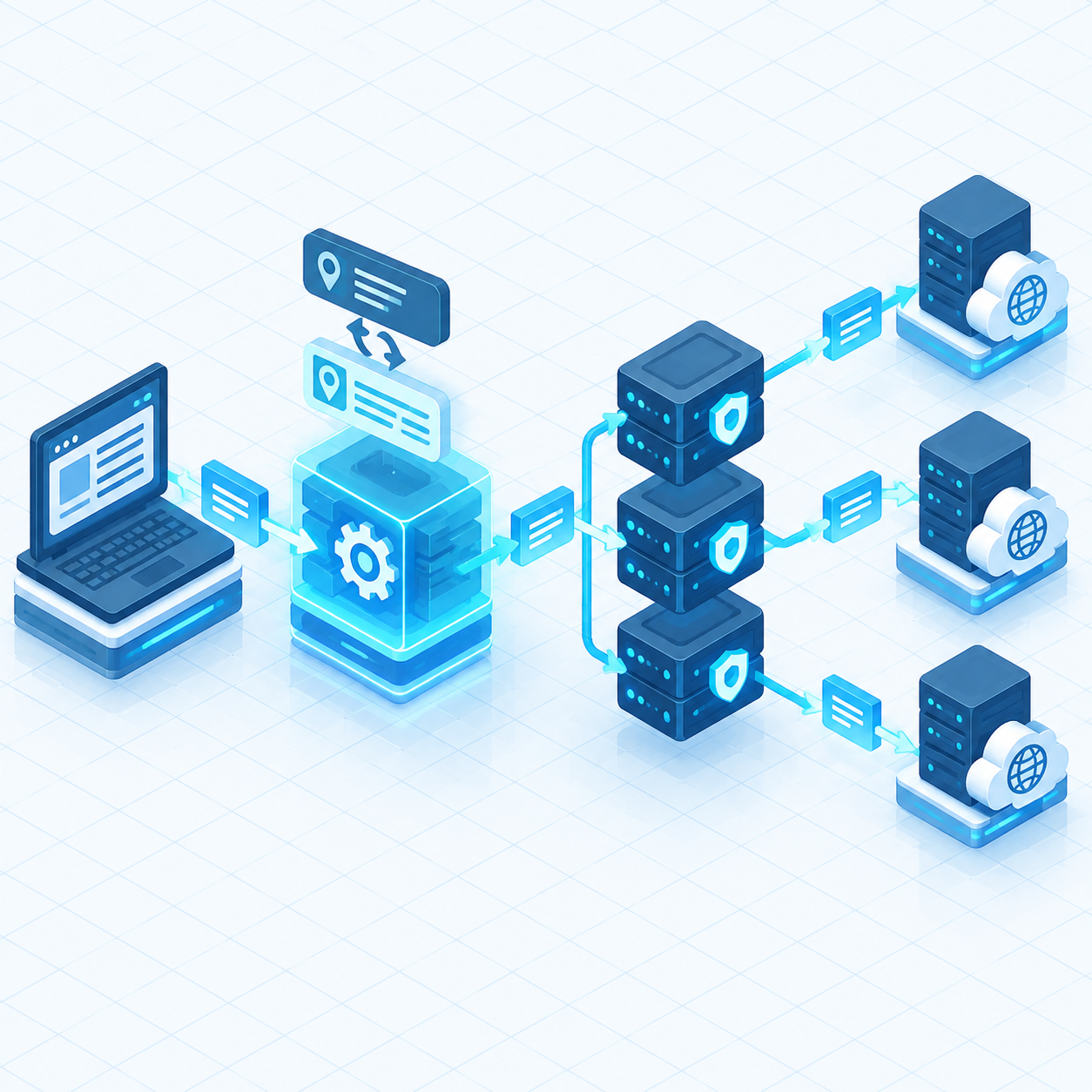 Scrapy Downloader Middleware intercepts outbound requests to automatically inject rotating proxy credentials.
Scrapy is a powerful framework written in Python dedicated to web scraping tasks. The core of managing and rotating IPs in Scrapy lies in the scrapy proxy middleware (Downloader Middleware) component.
Downloader Middleware sits in an intermediate position between the Downloader Engine and the Request/Response pipeline. Every time a Request is initiated from a Spider, it passes through the Downloader Middlewares before being sent to the internet. Here, we can intercept Request headers, assign proxy addresses, change User-Agents, or handle exceptions returned from the target server.
Detailed Guide to Configuring Rotating Proxies with Scrapy
Step 1: Prepare the Environment and Scrapy Project
First, ensure you have Python (version 3.8 or higher) and a virtual environment (virtualenv) installed. Proceed to install the Scrapy framework and supporting libraries using standard terminal commands.
After creating a new Scrapy project, you will have a standard directory structure containing key files such as settings.py, middlewares.py, and the spiders/ directory.
Step 2: Choose a Rotating Proxy Deployment Strategy
Currently, there are two main methods to integrate rotating proxy scrapy into your Python project:
- Use an existing library package (scrapy-rotating-proxies): Suitable for self-managed proxy lists (List of IP:Port). This library automatically tracks the performance of each IP, pauses failing or blocked IPs, and prioritizes well-performing ones.
- Use a Backend Rotating Proxy Service (Proxy Provider Endpoint): Professional proxy providers (such as Bright Data, Oxylabs, Smartproxy) provide a single endpoint (e.g., proxy.example.com:8080). Each request sent through this endpoint is automatically rotated to a new IP on the provider's server side. This method is the simplest and most effective for ultra-large-scale projects.
Step 3: Build a Custom Scrapy Proxy Middleware
To achieve maximum control over request processing, writing a custom scrapy proxy middleware is the preferred solution for data engineers. Below is the core logic flow to build in the middlewares.py file:
In the process_request method, we extract a proxy address from an available list or IP rotation service, then assign it directly to the request.meta['proxy'] attribute. If the proxy requires Username and Password authentication, the credentials must be Base64-encoded and set in the Proxy-Authorization header.
In the process_response method, the middleware checks the HTTP status code returned from the e-commerce site. If suspect blocking status codes are encountered—such as 403, 429, 503, or a CAPTCHA page—the middleware will disable the current IP, switch to a new IP, and put that Request back into the scheduler queue to retry.
Step 4: Configure Settings in settings.py
The settings.py file serves as the central control panel for the entire crawler. To optimize e-commerce price crawling and smoothly integrate proxies, you need to update the following parameters:
Enable Custom Middleware by declaring it in the DOWNLOADER_MIDDLEWARES attribute with an appropriate priority index, usually between 300 and 750, ensuring it runs before middlewares handling data compression or cookies.
Disable cookie management (COOKIES_ENABLED = False) unless logging in is strictly required. Sending fixed cookies alongside different IPs is one of the top red flags triggering anti-bot detection.
Adjust concurrency and delay parameters. Once you have a high-quality rotating proxy scrapy system, you can increase CONCURRENT_REQUESTS to boost crawling speeds. However, it is still recommended to set a small, random DOWNLOAD_DELAY (AutoThrottle Extension) to reduce pressure on the target server and avoid triggering anomaly detection algorithms based on request density.
Optimizing E-Commerce Price Crawling in Practice
Crawling price data on e-commerce sites is far more complex than extracting simple text from news websites. Below are advanced techniques to keep your system running reliably 24/7.
1. Combine Rotating Proxies with Rotating User-Agents
A common mistake when deploying proxy scrapy python is rotating IPs while keeping the User-Agent string constant. When thousands of requests originate from global IPs but share identical browser details, an e-commerce platform's security system can easily identify and flag the account.
Therefore, you should integrate automatic User-Agent rotation libraries (such as scrapy-user-agents) to ensure that each IP is paired with a valid, diverse Browser Fingerprint ranging from Chrome, Firefox, and Safari to mobile devices.
2. Select the Right Type of Proxy
 Residential and mobile proxies offer superior anonymity and lower block rates for dynamic price monitoring.
Not all proxies hold equal value when it comes to e-commerce price crawling:
- Datacenter Proxies: Very fast and cheap, but the IP ranges belong to cloud providers (AWS, DigitalOcean, etc.). Major e-commerce platforms can easily detect and block these IP ranges en masse.
- Residential Proxies: Real IP addresses assigned by ISPs to residential households. This is the most effective proxy type for price crawling because traffic appears identical to real users, resulting in an extremely low block rate.
- Mobile Proxies (3G/4G/5G Proxies): Utilize mobile network connections, offering the highest reliability but at the highest cost. Typically used as a fallback solution when facing sites with the strictest anti-bot systems.
3. Handle Dynamic Data (JavaScript Rendering) and AJAX Calls
Many modern e-commerce sites hide price details behind AJAX API queries or render interfaces using React, Vue, or Angular. Sending simple HTML requests will fail to retrieve product prices.
The optimal approach is using browser developer tools (F12 Network Tab) to discover the direct API endpoint that returns JSON price data. Once found, you simply use Scrapy to send requests along with scrapy proxy middleware directly to that API. This speeds up crawling by dozens of times compared to using headless browsers like Selenium or Playwright.
Error Control and Monitoring Automated Crawling Systems
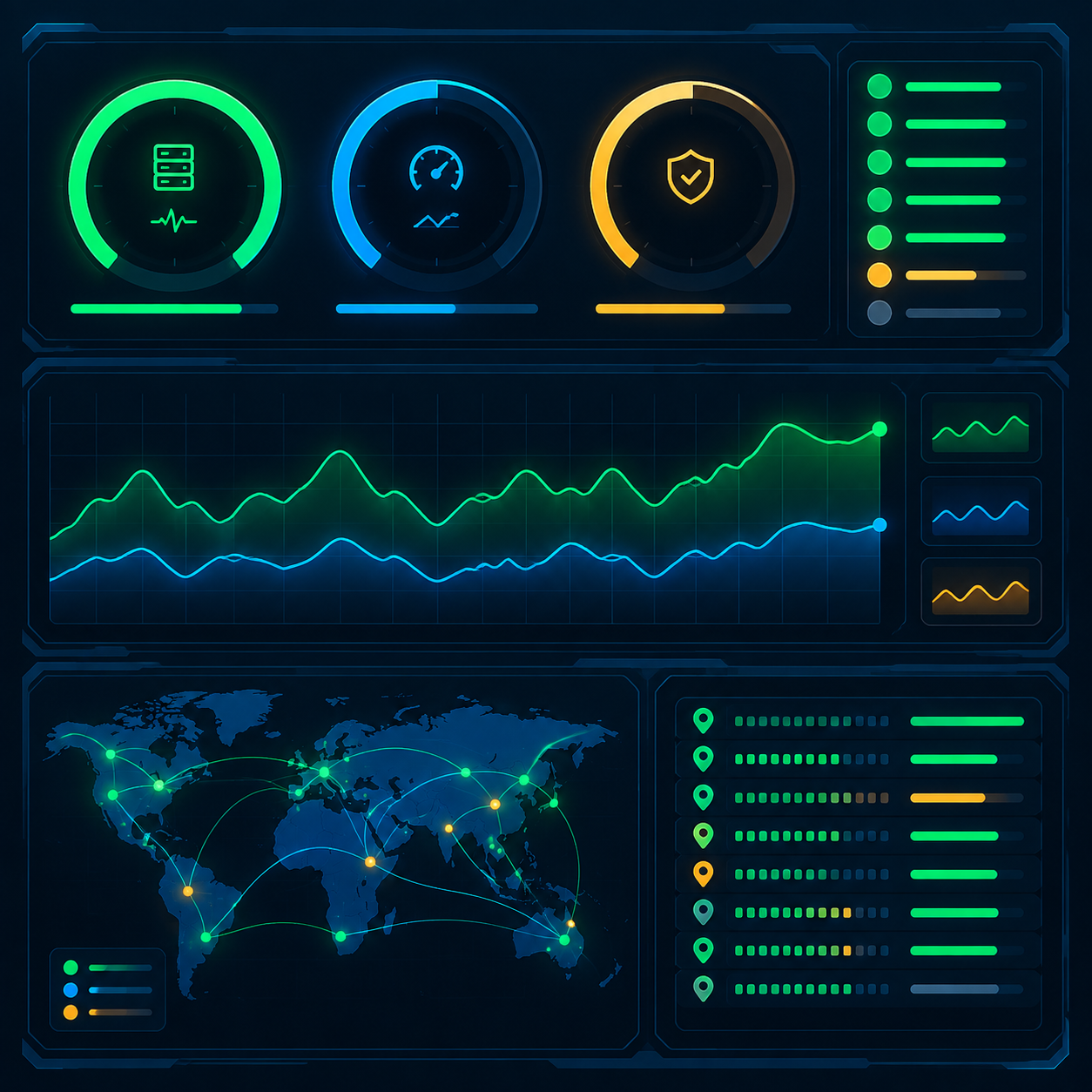 Tracking success rates and network latency ensures uninterrupted price data collection.
A professional competitor price scraping system requires continuous monitoring mechanisms. When implementing rotating proxy scrapy, pay close attention to the following key metrics:
- Success Rate: The ratio of 200 OK responses over total requests. This rate should ideally stay above 95%. A sharp drop may indicate exposed proxy lists or misconfigured middleware.
- Average Latency: Intermediary proxies can add latency. Set a reasonable DOWNLOAD_TIMEOUT (typically 10–15 seconds) to drop slow-responding proxies early and avoid clogging Scrapy's queue.
- DOM/HTML Structure Change Detection: Sometimes e-commerce sites do not block IPs outright, but instead return custom error pages or alter their DOM structure. Implement output data validation routines. If price fields continuously evaluate to null, the spider should immediately trigger an alert.
Conclusion
Automating competitor price monitoring is a strategic move that helps e-commerce businesses maintain a competitive edge and optimize revenue. Combining the asynchronous data collection power of proxy scrapy python with a robust rotating proxy scrapy setup thoroughly resolves anti-bot challenges, granting you stable and accurate data access.
By mastering custom scrapy proxy middleware development, choosing the right residential proxy provider, and optimizing request strategies, you will own a resilient data infrastructure ready to drive automated dynamic pricing and business analytics in the digital era.
Related articles
Ready for real proxies, not just the guide?
Buy Residential, ISP, Datacenter, or Mobile proxies — live in minutes.
View products